Leave a Comment
Your email address will not be published. Required fields are marked *
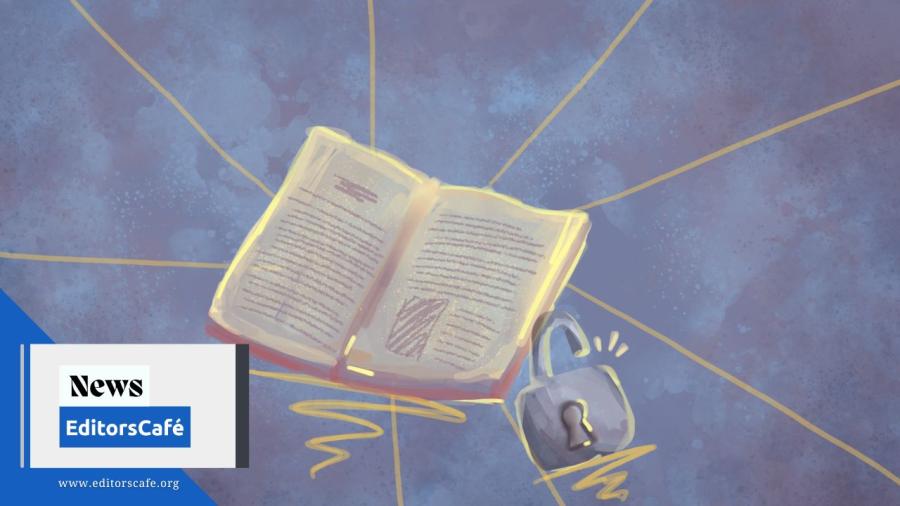
Scientific knowledge is meant to advance humanity. But when the cost of publishing research becomes prohibitive, an uncomfortable question arises: Is scientific publishing becoming a privilege of those who can afford it? This article attempts to answer this question.
Scientific research thrives on the exchange of knowledge. Traditionally, scholarly journals operated through subscription-based models, where readers or institutions paid to access published articles. The emergence of Open Access (OA) publishing promised to democratize knowledge by making research freely available to everyone.
However, this transformation has introduced another financial barrier, namely, article processing charges (APCs). Many open-access journals require authors or their institutions to pay publication fees, ostensibly covering editorial management, peer review, production, and digital dissemination. Although these services involve genuine costs, APCs have introduced a troubling paradox, highlighting that research may be free to read, but expensive to publish. Thus, the financial burden has shifted from readers to researchers.
APCs vary considerably across journals and publishers. While some journals charge relatively modest amounts, others demand several thousand US dollars. Nature, for example, lets authors of primary research articles choose gold Open Access for an APC of £9,390, US$12,850 or €10,850, while the subscription route carries no author fee. This is a specific fee for a specific journal and article type, and a high-end example, not a typical OA price.For researchers in well-funded institutions, such charges may be covered through research grants or institutional agreements. However, for scientists working in resource-constrained environments, they can represent an insurmountable obstacle.
Importantly, high publication charges do not necessarily guarantee superior scientific quality. Academic prestige, journal reputation, and publishing costs are not interchangeable measures of research excellence.The Budapest Open Access Initiative’s 20th Anniversary Recommendations explicitly recognize that APC-dependent publishing can exclude researchers on economic grounds, particularly those from the Global South.
India has a rapidly expanding research ecosystem, encompassing universities, medical colleges, research institutes, and independent investigators. Yet, financial support for scientific publication remains uneven.
Researchers at premier institutions may enjoy access to publication funding, whereas those working in smaller universities, state institutions, and peripheral medical colleges often lack dedicated APC budgets.
Early-career researchers, postgraduate students, and independent scholars face particularly difficult choices. At roughly ₹95–97 to the dollar in October 2026, that is about ₹190,000–290,000, a figure that moves with the exchange rate. This can substantially exceed the financial resources available to individual researchers.Consequently, the ability to publish in certain journals may depend not only on scientific merit but also on institutional affiliation and financial capacity.A 2021 commentary by Indian orthopaedic researchers argued that although low- and middle-income countries are usually exempted from APCs, India falls outside the waiver category of most journals that charge them. It added that most Indian institutions do not pay publication costs. The paper is a short commentary rather than a survey.
Financial pressure may also affect where researchers choose to publish. Price alone is not the dividing line, though. Many reputable journals charge modest fees or none at all, and a low fee does not make a journal predatory.The challenge, therefore, extends beyond affordability to encompass research integrity, equitable opportunities, and academic advancement.
India’s One Nation One Subscription (ONOS) initiative, approved by the Union Cabinet in November 2024 and became operational on 1 January 2025, represents an important intervention in scholarly access.The government allocated about ₹6,000 crore for 2025–2027. That is roughly US$620–630 million at current exchange rates, the program seeks to provide participating government higher education and research institutions with access to thousands of international journals .
Importantly, Support is available through an application process for ONOS Core Committee, gold OA journals that meet criteria set by the currently journals in the top 10 per cent on at least one of three citation indicators. Participating publishers have introduced additional arrangements, including discounts and read-and-publish agreements. These developments are encouraging.
A dedicated passage that separates reading access from publishing support, followed by: Who can access scientific knowledge? And who can contribute to the scientific record? APC assistance remains subject to eligibility criteria, journal selection, and institutional coverage.India must therefore address both dimensions of knowledge accessibility, namely, the right to read and the opportunity to publish.
A sustainable solution requires coordinated action by governments, funding agencies, academic institutions, professional societies, and publishers.
The following approaches deserve consideration:
It emphasises equity, inclusion and diversity in open science and encourages a variety of publishing models, including non-commercial, collaborative approaches that do not rely on author-side charges. Such principles provide a valuable foundation for India’s evolving research policies.
The fundamental purpose of scientific publishing is to disseminate discoveries, stimulate debate, and advance collective understanding. A system that excludes capable researchers because they cannot afford publication charges undermines these objectives.
For India, aspiring to become a global leader in research and innovation, publishing affordability is not merely a financial issue. It is a question of scientific equity, national research capacity, and intellectual inclusion.
The true value of scientific knowledge lies in its contribution to society, not in the price attached to its publication.The future of scholarly communication should be built around the simple principle that neither the ability to read scientific knowledge nor the opportunity to contribute to it should depend primarily on financial privilege.
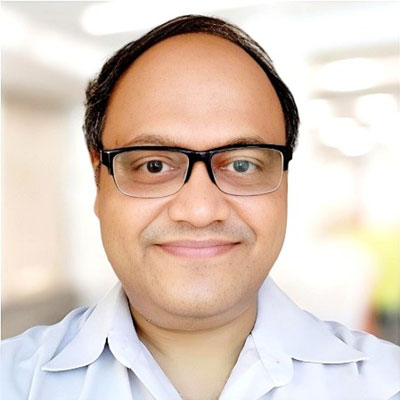
Dr. Kaushik Bharati is a Health Policy Consultant at UNESCO, New Delhi and former Consultant at WHO. He holds a PhD from the Calcutta School of Tropical Medicine, India and post-doctoral fellowship from the Liverpool School of Tropical Medicine, UK. He has held important positions in India and abroad, including the US, UK, France, and Australia. He has expertise in Infectious Diseases, Immunology, and Public Health. His scientific career spans almost three decades, with 123 publications to his credit. He has 29 years of editorial experience and is currently Editor-in-Chief of the SAAP Journal of Integrative Physiology (Colombo, Sri Lanka), the official journal of the South Asian Association of Physiologists (SAAP). He is also Editor-in-Chief of the Journal of Clinical Genetics and Genomics (Windsor, UK). He is Vice President of the Physiological Society of India and member of three societies, including the Infectious Diseases Society of America (Arlington, Virginia), American Society of Clinical Oncology (Alexandria, Virginia), and Royal Society of Tropical Medicine and Hygiene (London). He is also a Fellow of the Royal Society for Public Health (London). He has received 20 awards and distinctions for his research work from India, New Zealand, UK, and USA.
View All Posts by Kaushik BharatiThe views and opinions expressed in this article are those of the author(s) and do not necessarily reflect the official policy or position of their affiliated institutions, the Asian Council of Science Editors (ACSE), or the Editor’s Café editorial team.

Muhammad Ali’s fights gave boxing some of its most unforgettable names. These include “The Fight of the Century,” “Ru...
Read more ⟶
As fellow academics, lecturers, and researchers in Indonesia, we fully understand the concerns surrounding this issue. We oft...
Read more ⟶
Scholarly publishing has never had so many digital tools. Manuscript management systems, online peer review platforms, resear...
Read more ⟶