
Leave a Comment
Your email address will not be published. Required fields are marked *

The title and section headings intentionally echo the Harry Potter series. The literary allusion is playful, but the message is serious. Like magic in the wizarding world, editorial work often goes unnoticed, even though it is essential to the scholarly publishing ecosystem.
The Editor and the Philosopher's Invitation
An invitation to join the
editorial board of an international journal is more than an academic
distinction. It reflects confidence in a scholar's expertise,
professionaljudgment,
and commitment to research integrity. Such appointments
acknowledge contributions that extend beyond publishing one's own work to
helping ensure the quality of the work published by others.
This article draws on the documented experience of an Indonesian academic serving on several internationally recognized editorial boards. Despite these appointments, the editorial service could not be properly reported through SistemInformasiSumberdayaTerintegrasi (SISTER), Indonesia's national platform for recording and evaluating faculty workload and academic performance.
The Editor and the Chamber of Editorial Work
For many outside scholarly
publishing, editorial board membership appears to be largely honorary. In
reality, active editors perform essential work throughout the publication
process.
This work is fundamental to scholarly communication. Without competent editors, peer review would be slower, less consistent, and less trustworthy. Yet editorial contributions rarely receive the same visibility as publications, citations, research grants, or institutional rankings.
The Editor and the Prisoner of Bureaucracy
Beginning in January 2025, the
academic attempted to report editorial service through SISTER. Several
internationally recognized journals where the academic serves as an editor,
including SAGE Open, a
leading multidisciplinary social science journal indexed in both the Web of Science Core Collection and Scopus,World Journal of
English Language,
indexed in Scopus, and Journal of IslamicEducational
Research,
published by Universiti Malaya (QS World UniversityRankings 2027: #56)—were
absent from the system's database. The issue was not the legitimacy of the
appointments. They were publicly verifiable through journal websites and
editorial board listings. Rather, the reporting system simply could not
accommodate the journals.
Consequently, editorial work that was recognized internationally became difficult to recognize nationally.
The Editor and the Goblet of Emails
Finding a solution proved far
more difficult than identifying the problem. Beginning in January 2025, the
academic repeatedly contacted university administrators, the national SISTER
helpdesk, and university leadership. Screenshots, appointment evidence, lists
of journals, and formal requests were submitted over more than a year in an
effort to have the journals added to the database.
The responses were consistently prompt and professional. Because the academic was affiliated with a university administered by Indonesia's Ministry of Religious Affairs, the recommended administrative pathway required coordination through the ministry before the matter could be referred to the national data center for further handling.
Despite these sustained efforts, the latest version of the SISTER database still does not include several of the relevant journals. As a result, the editorial service remains difficult to report within Indonesia's national academic evaluation system.
The Editor and the Order of Recognition
This experience appears to
reflect more than an isolated administrative issue. Other Indonesian academics
have also reported difficulties in recording editorial service through SISTER.
More importantly, the underlying question extends beyond Indonesia.
Many national research systems encourage academics to publish in internationally indexed journals. Publications are linked to promotion, institutional reputation,university rankings, and national research performance. However, comparatively little attention is paid to the editorial work that enables those journals to maintain their quality and credibility.
The irony is difficult to ignore.
Publications are counted. Citations are counted. Grants are counted. But who counts the editors?
The Editor and the Half-Recognized Service
Recognizing editorial work does
not mean rewarding every editorial title equally. Editorial responsibilities
differ substantially across journals. Some appointments involve active
manuscript handling and editorial decision-making, while others are primarily
advisory.
Fortunately, meaningful editorial contributions can be documented. Appointment letters, editorial board webpages, manuscript handling records, reviewer recruitment, editorial recommendations, and other evidence can distinguish genuine editorial service from honorary affiliation.
Research assessment systems already differentiate among publications, grants, patents, and other scholarly outputs. They can likewise distinguish between symbolic editorial appointments and active editorial contributions.
The Editor and the Deathly Workloads
Editors form part of the
invisible infrastructure of scholarly publishing. Their work protects research
quality, strengthens peer review, and supports authors, reviewers, and journals
alike.
As countries continue investing in research excellence and international publication, their academic evaluation systems should evolve accordingly. Recognizing verified editorial service would not simply reward individual academics. It would acknowledge a vital contribution to the integrity and sustainability of scholarly communication.
The next evolution of research assessment should ask not only who publishes research, but also who helps ensure that the research deserves to be published.
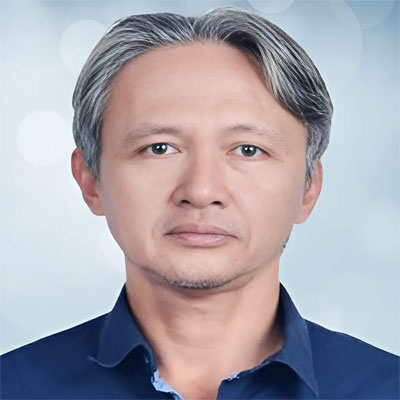
Abdul Syahid has been teaching English since 1995 and earned his doctorate in English Language Teaching from the State University of Malang in 2015. Since 2020, he has served as a faculty member at Universitas Islam Negeri Palangka Raya, Indonesia. His research focuses on language testing and assessment. He actively collaborates with scholars from Indonesia, Malaysia, Iran, and the United States, including Professor Donald Freeman, on a nationwide teacher training initiative based on a global framework. He has reviewed over 120 manuscripts and serves on editorial boards such as SAGE Open while valuing time with his family.
View All Posts by Abdul SyahidThe views and opinions expressed in this article are those of the author(s) and do not necessarily reflect the official policy or position of their affiliated institutions, the Asian Council of Science Editors (ACSE), or the Editor’s Café editorial team.


Technology has transformed editorial operations by supporting efficient manuscript handling, rigorous quality assurance, an...
Read more ⟶
Every researcher has probably asked themselves the same question before submitting a manuscript: “Which is the highe...
Read more ⟶
In contemporary scholarly publishing, visibility is often discussed as if it were merely a technical achievement: obtain an ...
Read more ⟶