
Leave a Comment
Your email address will not be published. Required fields are marked *
For an academic journal, securing a place in a major international index such as Scopus or Web of Science often feels like crossing the finish line. It is a grueling process of quality checks, ethical audits, and formatting compliance. Yet, many regional journal editors discover a frustrating reality shortly after the celebration ends: indexing does not automatically equal visibility.
Despite being technically searchable alongside global flagship journals, many regional publications remain academic islands with limited international visibility. Indexing opens the door, but it doesn't force anyone to walk through it.
If your journal is indexed but still struggling to gain traction, several factors may be limiting its visibility. Among the most common are author reputation, thematic focus, citation dynamics, and editorial reputation.
The "Reputation Loop" of the Authorship Base
A journal is largely defined by the community that writes for it. Regional journals naturally attract local or regional researchers. While the science itself may be sound, these authors often face a visibility deficit.
Limited Academic Networks: Researchers from developing regions or localized institutions may not have the expansive international networks required to bring their work into broader global academic conversations.
Reputation Bias: Academic readers often gravitate toward familiar authors and well-known institutions. When an article is written by an author without an established international reputation, global peers may be less likely to discover, read, or cite the work.
This creates a challenging loop: international authors avoid the journal because it lacks global prestige, leaving the journal reliant on a localized author base that struggles to project a global presence.
Niche Localism vs. "Hot Topic" Stagnation
To attract global attention, a journal needs to publish content that aligns with current scientific trends and emerging technological frontiers.
Regional journals often fall into the trap of publishing descriptive, highly localized studies (e.g., "Soil composition analysis in District X" or "A localized study of concrete degradation in Region Y"). While this research is incredibly valuable for local infrastructure and policy, it may attract limited attention from the broader international scientific community.

If a journal is not actively soliciting papers on high-impact, emerging technologies or universally relevant scientific challenges, it may struggle to attract researchers working at the forefront of their fields.
The Visibility-Citation Paradox
Indexing makes a paper discoverable, but discoverability is static. True visibility is dynamic and grows through readership, engagement, and citations.
Papers with few or no citations are often less visible in search results and recommendation systems, making it more difficult for them to gain wider recognition. Low initial citation rates can also influence journal-level metrics such as Impact Factor or CiteScore.
Furthermore, regional journals often suffer from limited digital optimization. If articles lack complete metadata, are not easily shareable on academic platforms such as ResearchGate or social media, or remain buried within outdated repository interfaces, international researchers may encounter unnecessary barriers and simply move on to more accessible sources.
The Editorial Board: The Missing Magnet
The composition of a journal's editorial and review teams can strongly influence how the journal is perceived by prospective authors and readers.
If the editorial board and reviewers consist solely of local academics, regardless of their expertise—the journal may lack an international network that helps broaden its visibility. An editorial team that includes recognized, internationally respected scholars can strengthen confidence in the journal and encourage submissions from a wider research community.
Turning the Tide: From Indexed to Impactful
To break out of regional isolation, editorial teams must shift from a mindset of maintenance to one of active curation.
Securing indexation was Step 1. Step 2 requires actively recruiting international co-editors, organizing special issues on emerging research themes, improving article discoverability, and promoting published work through global academic networks.
Indexing provides the stage; thoughtful editorial strategy determines whether a journal truly reaches its audience.
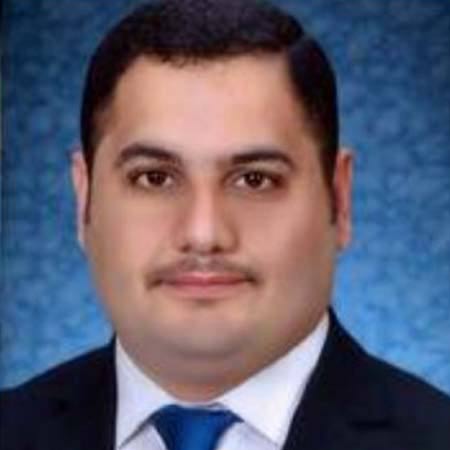
Dr. Ali H. Wheeb is an Associate Professor at the College of Engineering, University of Baghdad, Iraq. He received a Ph.D. Degree with Graduate on Time Award (Ph.D. with GoT) in Electrical and Electronic Engineering from the University of UKM, Malaysia. His research interests include UAV Networks, UAV, Networking, IoT, MANET, FANET, Wireless Communication, Routing protocol, Machine learning (ML), Reinforcement Learning (RL), Q-learning, Deep Q-Network (DQN), Mobility Models, and Simulation Tools (NS-2, NS-3, ns-gym). Asst. Prof. Dr. Ali authored 20 research papers and books. Furthermore, he has served as a reviewer for 110 journals and conferences, reviewing over 765 papers. Further, he was appointed as chair of the organization at the DECA 2022 international conference and chair of publication at the ICIDIT 2023 and ICBIS 2024 international conferences. Asst. Prof. Dr. Ali was selected as a program committee member (PCM) and technical committee member (TCM) at 50 international conferences. Further, Prof. Ali was appointed as an Editorial Board Member in several international journals. Moreover, Prof. Ali has received several Awards, including the Young Scientist Award in the International Scientist Awards 2022 on Engineering, Science, and Medicine from INSO AWARDS, an Excellent Reviewer Award from WoS in 2023, and a GoT Award from UKM in 2024. In Addition, Prof. Ali is a member of several organizations such as the Iraqi Engineering Union, European Alliance for Innovation (EAI), Asian Council of Science Editors (ACSE), Franklin London Journals Press, Elsevier, IGI, Springer Nature, STM, and Nano-Science & Technology Consortium (NSTC). Moreover, Asst. prof. Dr. Ali participates in the conduct of the Times Higher Education (THE) World University rankings (2024, 2025) and QS World University rankings (2025).
View All Posts by Ali Hussein WheebThe views and opinions expressed in this article are those of the author(s) and do not necessarily reflect the official policy or position of their affiliated institutions, the Asian Council of Science Editors (ACSE), or the Editor’s Café editorial team.

The title and section headings intentionally echo the Harry Potter series. The literary allusion is playful, but the mess...
Read more ⟶
Technology has transformed editorial operations by supporting efficient manuscript handling, rigorous quality assurance, an...
Read more ⟶
Every researcher has probably asked themselves the same question before submitting a manuscript: “Which is the highe...
Read more ⟶